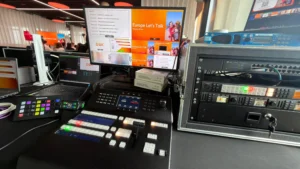
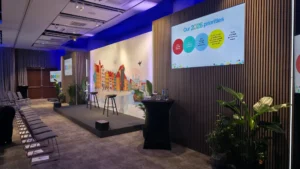
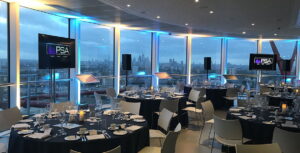
A lot of events now include some form of streaming.
Sometimes it’s a remote presenter joining for one session.
Sometimes it’s a fully hybrid event with delegates watching from different locations throughout the day.
And sometimes the stream is simply there to make an event accessible to people who can’t be in the room.
For most clients, they simply want the whole thing to work properly without the stream becoming difficult to manage.
That sounds straightforward, but there are quite a few moving parts involved when an event needs to work for two audiences at the same time.
A lot of the preparation happens before the audience joins.
Testing internet connections.
Checking presentation feeds.
Making sure remote presenters can hear and see properly.
Managing audio paths between the room and the stream.
Checking camera positions, lighting and what the online audience will actually see.
That preparation becomes even more important once live audiences are involved both in person and remotely at the same time.
Audio is usually where problems show themselves first.
Microphones sounding distant.
Presenter feeds dropping unexpectedly.
Remote speakers struggling to hear questions from the room.
The room sounding perfectly clear in person but difficult to follow on the stream itself.
Those are usually the things remote audiences notice fastest.
It is why audio for a hybrid event has to be considered from both sides. What sounds right through the PA system in the room is not necessarily what someone watching through a laptop will hear.
The same applies when a remote presenter is speaking to an audience in the venue. They need to be able to hear questions and conversations clearly without creating feedback, delays or awkward interruptions.
Rehearsals make a big difference.
Where remote speakers or multiple presentation sources are involved, rehearsing the important transitions beforehand can remove a lot of uncertainty on the day.
That might mean checking how a remote presenter joins the session, testing their microphone and camera, confirming how their slides will be shown or making sure everyone understands what happens when questions are taken from the audience.
It also gives the technical team an opportunity to spot potential problems before the event is live.
And because internet connections and remote systems are not always predictable, it is sensible to think about contingency too. Having alternative ways to manage presentations, playback or communication can prevent a small technical issue from becoming a much bigger disruption.
The setup also has to work naturally for the people physically attending the event.
The fact that an event is being streamed shouldn’t make the experience inside the room more complicated.
Cameras need to be positioned properly without getting in the way.
Screens need to show the right content.
Presenters need to feel comfortable using the setup without constantly thinking about the technical side.
And if somebody joins remotely, the conversation needs to feel as natural as possible for both the speaker and the people sitting in the room.
The same consideration should be given to the remote audience.
They need to be able to see who is speaking, follow presentations clearly and hear questions or discussions taking place within the venue. Simply pointing a camera towards a stage is rarely enough to create a good viewing experience.
Hybrid works best when it feels like one event.
When it’s prepared properly, the stream should feel like part of the event rather than something separate bolted onto the side of it.
People watching remotely shouldn’t feel like an afterthought, and people attending in person shouldn’t feel as though the event has been compromised because it is also being streamed.
The technology should support what is happening rather than become the focus of it.
Over the years we’ve supported streamed and hybrid events across conferences, corporate environments and live productions, helping clients deliver events to audiences both inside and outside the room.
Reliable.
Professional.
Experienced.
If you’re planning a streamed or hybrid event and want support with the technical setup, we’re always happy to have a conversation.